

Queenie Luo graduated summa cum laude from Columbia University with a B.A. in Religion and Physics in 2018, completed her M.T.S in Buddhist Studies at Harvard Divinity School in 2020, and her M.S degree in Data Science at Harvard John A. Paulson School of Engineering and Applied Sciences in 2023.
Queenie’s research explores the making of early Chinese states during the Spring and Autumn and Warring States periods. Bridging ancient history and cutting-edge AI, she develops agentic AI tools to uncover patterns of state-building from fragmented historical evidence, including oracle bone scripts, bronze inscriptions, bamboo strips, tomb materials, ancient sites, landscape features, and transmitted texts. She also collaborates with faculty in computer science, statistics, and the social sciences to advance research on large language models, with a focus on fairness, ethics, and their broader societal implications.
Before coming to Columbia, Queenie spent three years studying Fashion Design at Parsons School of Design in New York. In 2018, Queenie received the Phi Beta Kappa Prize, which is awarded to the candidate who best represents the ideals of the society—intellectual integrity, tolerance for other views, and a broad range of academic interests. Queenie led the Norbu Ketaka project to clean 1,000,000 pages of Classical Tibetan manuscripts using NLP and Computer Vision methods, and donated the database to the Buddhist Database Resource Center (BDRC) upon completion. Queenie also works at the Institute for Quantitative Social Science (IQSS) on the China Biographical Database project (CBDB), where she developed the Lepton, Kraft, and TITO models, which have successfully assisted CBDB in expanding its database repository by employing NLP techniques.
Articles

[1] Queenie Luo and Michael Puett. “Anglo-American bias could make generative AI an invisible intellectual cage”. Nature. Vol 629 Issue 8014, May 2024
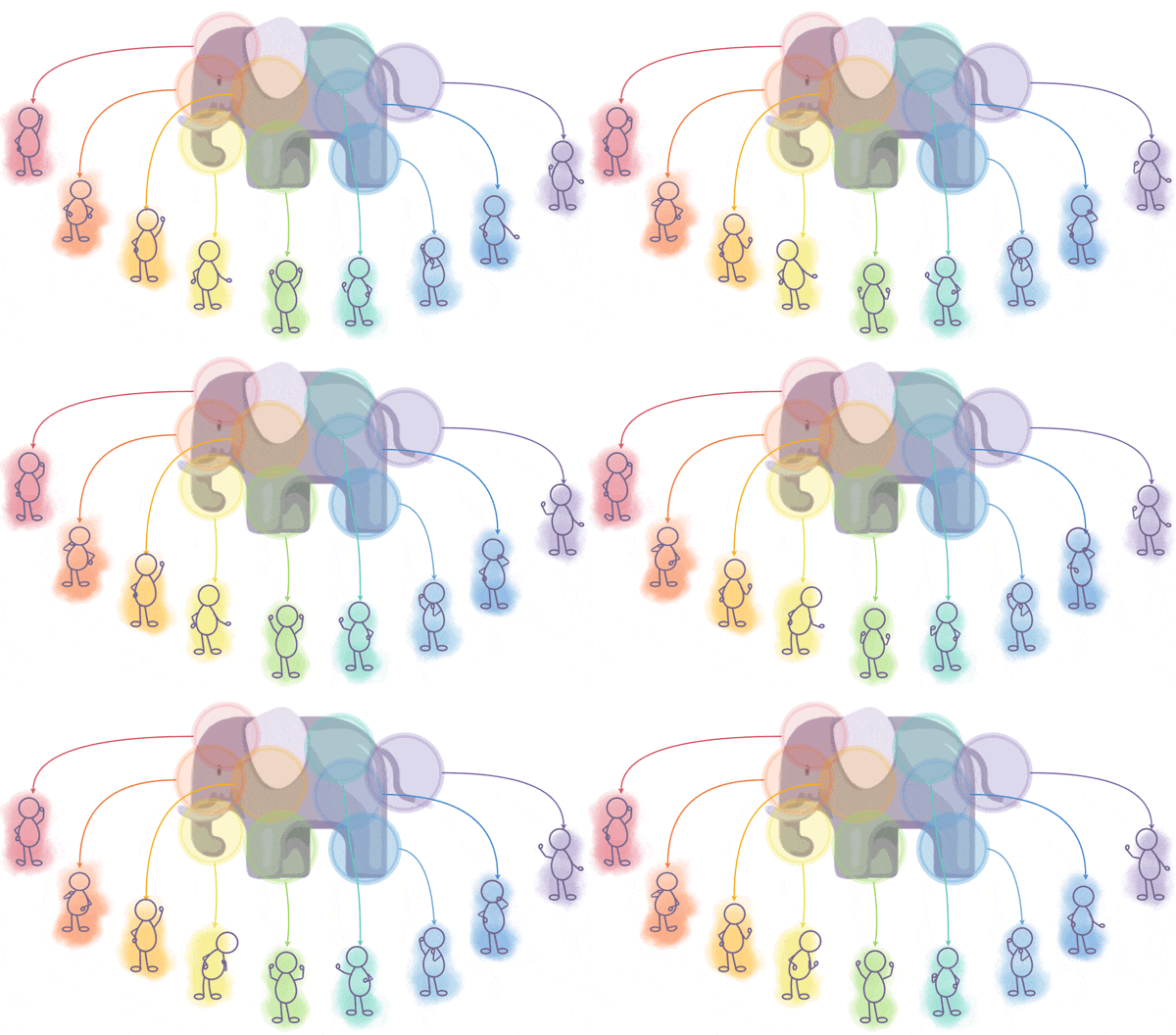
[1] Queenie Luo, Michael J. Puett, Michael D. Smith. “A Perspectival Mirror of the Elephant: Investigating Language Bias on Google, ChatGPT, YouTube, and Wikipedia”. Communications of the ACM, August 2024 Issue, Vol. 67 No. 8
Press: Wikimedia Research Newsletter, Twitter, South China Morning Post, Harvard Gazette News
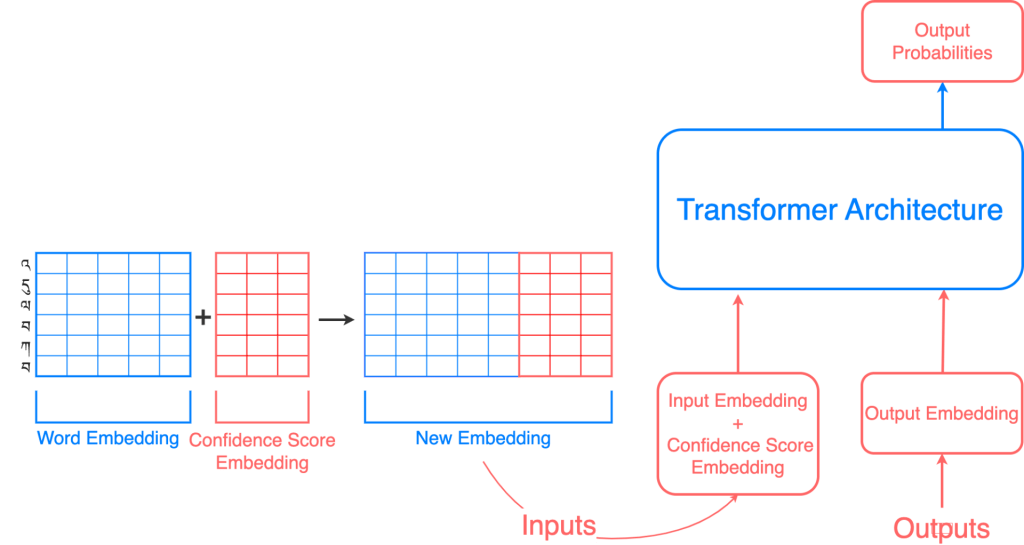
[2] Queenie Luo†, Yung‑Sung Chuang† “Cleansing Jewel: A Neural Spelling Correction Model Built On Google OCR‑ed Tibetan Manuscripts”. ACM Transactions on Asian and Low-Resource Language Information Processing. April 2024. († indicates equal contribution.)
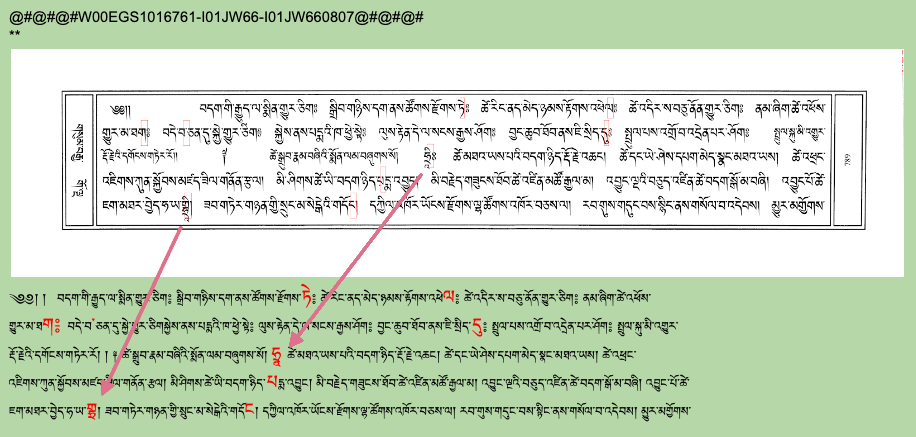
[3] Queenie Luo, Leonard W. J. van der Kuijp. “Norbu Ketaka: Auto-Correcting BDRC’s E-Text Corpora Using Natural Language Processing and Computer Vision Methods”. Revue d’Etudes Tibétaines. Tibetan digital humanities and natural language processing. Proceedings of the IATS 2022 Panel.
Press/Related Link: Norbu Ketaka database , BUDA, Harvard Fairbank Center Blog
Projects
Norbu Ketaka Database
Project lead: Queenie Luo, Principal Investigator: Leonard W. J. van der Kuijp.
Description: The Norbu Ketaka project employs the latest cutting-edge technologies in AI and deep learning to process one million pages of Tibetan texts. This includes the labeling of training data, adjustments to neural network architectures, and the creation of new Natural Language Processing (NLP) and Computer Vision models. Additionally, a personnel management system was designed and implemented using the Google Docs API and Google Drive API, which facilitated the distribution of 12,000 documents to 40 part-time annotators based on their Tibetan proficiency and time availability, as well as tracking and evaluating the quality of the edited documents. The final “cleaned” texts are donated to BDRC and publicly accessible here.
Press/Related Link: Norbu Ketaka database, BUDA, Harvard Fairbank Center Blog
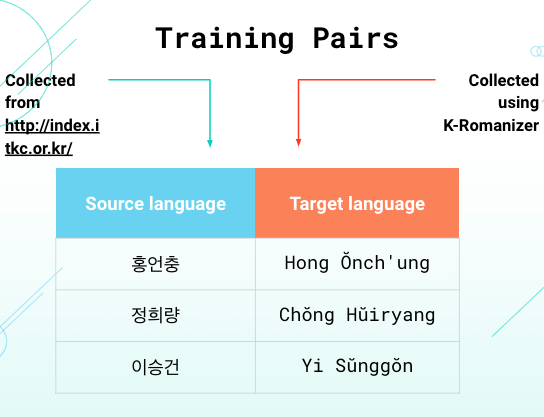
Kraft
Authors: Queenie Luo, Yafei Chen, Hongsu Wang, Kanghun Ahn, Sun Joo Kim, Peter Bol, CBDB Group
Description: The Kraft (Korean Romanization From Transformer) model translates the characters (Hangul) of a Korean person-name into the Roman alphabet (McCune–Reischauer system). Kraft uses the Transformer architecture, which is a type of neural network architecture that was introduced in the 2017 paper “Attention Is All You Need” by Google researchers. It is designed for sequence-to-sequence tasks, such as machine translation, language modeling, and summarization.
Code: Hugging Face Kraft Model
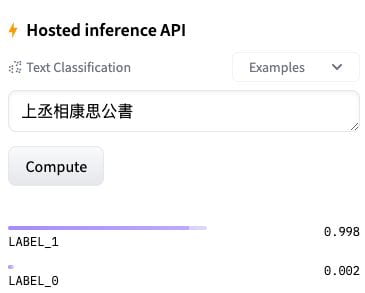
Lepton
Authors: Queenie Luo, Katherine Enright, Hongsu Wang, Peter Bol, CBDB Group
Description: The LEPTON (Classical Chinese Letter Prediction) model is BertForSequenceClassification Classical Chinese model that is intended to predict whether a Classical Chinese sentence is a letter title (书信标题) or not. This model is first inherited from the BERT base Chinese model (MLM), and finetuned using a large corpus of Classical Chinese language (3GB textual dataset), then concatenated with the BertForSequenceClassification architecture to perform a binary classification task. (Labels: 0 = non-letter, 1 = letter) This model helped CBDB efficiently and accurately identify 50,000 letters and build a letter platform for Ming letter association research.